Thursday, April 3, 2014

Mirror, Mirror: Oculus is a Wild Ride through a Warped Reality

Co-produced by Blumhouse and WWE Films, Oculus is the latest effort from Absentia writer/director Mike Flanagan. The film premiered at TIFF in September and has had a successful run on the festival circuit, earning itself  a 100% rating on Rotten Tomatoes. With the combined star power of Flanagan and Blumhouse Productions behind it, as well as two female stars who bring immense nerd-cred (Doctor Who's Karen Gillan and Battlestar Galactica's Katee Sackhoff), horror fans have been chomping at the bit to catch this one on the big screen. I myself stood in line for almost three hours with a group of other wristband-less fanboys and girls at South By Southwest to get a look at this one. Unfortunately, this meant that I watched the entire film from the neck-breaking angle afforded by the front row, far stage left, but it was nevertheless a great little film.


Oculus tells the story of a sister and brother (Gillan and Brendon Thwaites) whose lives were nearly undone by the tragic murder of their mother at the hands of their father. In fact, young Tim (Thwaites) was forced to kill their father, a decision for which he spent a decade in a psychiatric facility. The film picks up with Tim's release back into the care of his loving sister Kaylie, now an antiques dealer with a handsome fiancée and an almost-perfect life. But while Tim was working hard to forget the events of their childhood, Kaylie never let go of the notion that their father's actions were the work of a supernatural power, and that the source of that power was an ornate antique mirror that hung in his office.


The events of the film take place over the course of one harrowing day in which Kaylie and Tim set out to prove the mirror's terrible power and clear their late father's name. Using her position dealing in antiques, Kaylie is able to get the mirror back to their childhood home one last time and set up a series of clever experiments in the hopes of catching some of the mirror's sinister effects on camera. These effects include killing houseplants, causing lights to burn out unexpectedly, and, of course, influencing the actions of the two siblings. But they get more than they bargained for when they come to the realization that the mirror has an uncanny ability to warp reality, and soon, they are not safe from the mirror, or themselves.


The pacing of Oculus is superb, flitting back and forth between the present day, flashbacks from the siblings' childhood, and Kaylie's recountings of the mirror's dark history. As the mirror grows more and more powerful, characters and viewers alike lose track of which events are real, and which have been engineered by the mirror to drive Tim and Kaylie closer to the brink of insanity. The film's tagline, 'You see what it wants you to see,' could not be a more apt description of the experience of watching Oculus. In the end, past and present begin to merge into one, and our protagonists seem doomed to repeat the monstrous events of the past. Sackhoff and Rory Cochran round out the very real and sympathetic cast of characters as the two parents, seen only in flashbacks, and James Lafferty also stars as Kaylie's well-meaning fiancée.


Throughout its 105-minute runtime, Oculus maintains the atmosphere of a classic haunted house film, though in this story, the ghosts are not what our characters should be worried about. Oculus delves deep into the darkest acts of which man is capable, and poses some interesting questions about the nature of insanity and man's responsibility for his actions. This film delivers on classic jump scares, and Flanagan lets the tension build up to the point of edge-of-your-seat, nail-biting nerves until the very last scene. There's also just a touch of well-appointed gore that drives home the film's most shocking moments.

Oculus opens in wide release next Friday. Check your local theatre's listings and help give this one an opening weekend for the record books.

Tuesday, March 11, 2014

SXSW World Premiere: Among The Living (Aux Yeux Des Vivants)

Last night, I had the pleasure of attending the world premiere of Alexandre Bustillo and Julien Maury's latest film, Among The Living (Aux Yeux Des Vivants), at the SXSW Film Midnighters series. Maury himself was on hand at Austin's Stateside Theatre to answer audience questions after the screening, and gave some great insight into this third film from the directorial duo. Maury stated that he and Bustillo do, in fact, consider their three films to date (2007's Inside [Á L'interieur] and the 2011 Livid [Livide] together with Among The Living) to make up a trilogy of sorts, though the plots and settings of the three differ greatly. Viewers of all three will find some definite thematic similarities, starting with the fact that all of the films deal with family and parenthood through a warped lens. According to Maury, Inside was their love letter to the slasher genre, while Livid owed more to the Gothic atmospheric horror of the mid-20th century. Among The Living, however, pays clear homage to American horror films of the 1980s, with obvious nods to films like The Hills Have Eyes and The Texas Chain Saw Massacre. 


Among The Living gives viewers the opposite of what they expect from the very first scene, setting an uneasy tone that lasts the full 90 minutes of the film. We follow a group of early trick-or-treaters up the steps of a run-down home in a rural town, and meet a husband and wife whose unhappiness is palpable. The wife, evidently about nine months pregnant, waits on her husband hand and foot while he watches a news program about known birth defects in the children of soldiers subjected to a particular form of chemical warfare. In a subtle bit of exposition, his dog tags glint at his chest and a vein throbs at his temple, and he is struck by a bizarre attack that involves strange and disturbing images flashing behind his eyes one by one. The audience is forced to join him for this, and when we return to reality, we've almost completely forgotten his hapless wife, who appears suddenly behind him with a bat and cracks him several times on the head.


 Leaving her husband for dead, she trades the bat for a rather large kitchen knife, and ascends the stairs to the bedroom of another child the audience has hitherto been unaware of. We watch through the child's eyes as his mother advances toward him, slashing wildly with the knife. Somehow, his father makes it upstairs just in time and puts a stop to the attack, but his wife, in her desparation, turns the knife on the unborn child in her belly. Father comforts young Klarence, and the two make plans to disappear and start a new family, among the living. True to their roots in extreme gore, the directors make sure that we stop to take in the wound where the woman's fetus has been removed and taken away.


Exposition behind us, we now move into the true first act of the film, and meet our protagonists, three junior high school-aged boys whose classroom antics earn them detention on the last day of the school year. But instead of serving their sentence, the three decide to ditch campus and smoke cigarettes in a picturesque field abutting the barn of a cranky old man. When a misguided attempt at arson goes awry, the three flee to a far more interesting place to hide out and avoid the consequences: the nearby Blackwood Studios, an abandoned lot of film sets that have been left to vandals for many years. It is here that the boys encounter a hulking figure in a clown mask who has a woman bound and gagged in the trunk of a car. When they bring the police back later to check it out, their story is written off as some sort of boy-who-cried-wolf scenario, and they return to their homes for varying degrees of punishment. 


But Klarence and his father have been found. Their hideout and bizarre rituals at Blackwood Studios are threatened, and so Klarence must pay each of the boys a visit, in turn, to ensure that they never bring any more police to investigate. The remainder of the film unfolds as one of the most unique home invasion horror thrillers you'll ever see, with a monster that will haunt you long after the film concludes. The actors playing the three boys are quite good, and their on-screen chemistry with the other characters in their lives makes it hard to watch as the body count rises. However, the directors have found a rare balance in evincing sympathy for the attacked as well as the attacker, and Klarence comes with his fair share of pathos. But don't think for a moment that this film does not bring to the table some very creative and shocking violence. Bustillo and Maury show a great understanding of body horror in some key climactic scenes, with excruciating pacing that had the premiere audience squirming in their seats.


One of the things I found to be most unsettling about Among The Living was the film's insistence that our protagonists were not safe even in the daylight. So many films allow viewers to feel secure in the fact that the daytime is safe, but as soon as the sun goes down, to expect things that go bump in the night. In this film, several of the tensest sequences take place in broad daylight, which means that the audience never gets a chance to relax back into their seats. Composer Raphael Gesqua's score is equally relentless, and so original as to remain stuck in your head for hours after you leave the theatre. The first two acts of the film feature whimsical, almost carnival-like melodies, tainted with slight hints of discord that portend bad things ahead. The climactic scenes, on the other hand, are swept along with a brisk and almost lilting score that is both classic and fresh, and wouldn't be out of place in one of James Whale's original Frankenstein films.

As of now, this film has a release date of April 10th in Belgium, where much of the shooting took place. There doesn't appear to be a US release planned just yet, but if you're in Austin for SXSW, you'll have two more chances to catch this one screening at the Alamo Ritz, tonight at midnight, and again Friday at midnight. Keep an eye on Metaluna Productions who may have further information about a much-needed international release for this striking film.

Tuesday, March 4, 2014

Grand Piano Delivers Symphonic Thrills

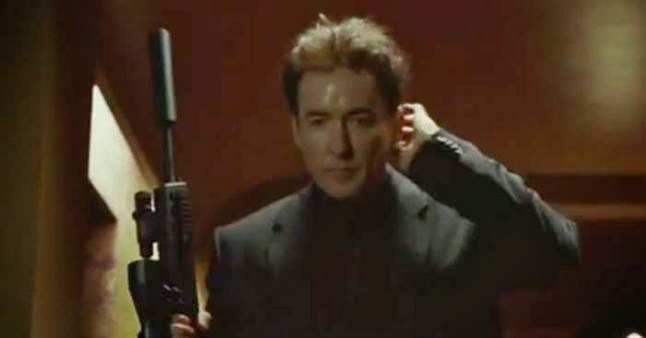
Fresh off his win of Fright Meter's Best Actor award for his role in Franck Khalfoun's Maniac remake [read my review here], Elijah Wood stars in Grand Piano, an unconventional thriller from Spanish director Eugenio Mira which opens in a limited US release this Friday. Wood gets to be the good guy this time, portraying a brilliantly talented but nervous and cynical piano prodigy, Tom Selznick. We meet Selznick and his A-list actress wife Emma on the eve of his first concert in five years, following a very public failure that nobody will let him forget. But Selznick soon learns that a little stage fright is the least of his concerns, when he settles onto the piano bench only to find a series of threatening annotations scrawled across his score. "Play one wrong note and you die," reads the first. "Do you think I'm kidding? Look to your right."


As he does so, the scope of a sniper rifle finds him, and directs him offstage where he finds an earpiece has been left for him. Donning the earpiece, Tom enters into a frenzied game of cat-and-mouse that lasts the rest of the performance, in which he must continue to play flawlessly or risk the life of his beautiful wife, who watches unknowing from a box seat. The voice on the other end of the earpiece belongs to John Cusack's character, whose motives are unclear, but seem to have something to do with the missing fortune of Selznick's late mentor, an eccentric and brilliant composer.


For an avid fan of the horror genre (he recently founded The Woodshed Horror Company, which has three films in the works), Wood has been cast in surprisingly few roles on the darker side of cinema. Fans were suitably impressed with his portrayal of silent, cannibalistic serial killer Kevin in Frank Miller's Sin City, and glad to see him land a starring role as the psychopathic Frank in Maniac. The role of Tom Selznick, however, bears a lot more similarity to one of his earliest roles, the skittish high school newspaper photographer in the 1998 sci-fi send-up The Faculty. Selznick has a fear of flying, is a chronic nail-biter, and, as multiple characters remind him within the first act of the film, has a history of being frozen by stage fright in tense situations. In the end, however, he must find a way to turn his frantic nerves from a crutch into a weapon, and play the piano like his life quite literally depends on it.


The electric energy that drives Grand Piano forward can be attributed in large part to its sweeping original score, penned by Mira himself, who is a composer first and foremost. The constant crescendos and brash, discordant notes begin during the credits, setting the soundtrack to a series of close-up shots of piano parts that are made to almost resemble some strange weaponry. The intensity of the score rarely lets up through the film's 90-minute runtime. The music is almost a character in and of itself, with Selznick's late mentor's 'La Cinquette,' believed to be unplayable, starring in the final, fevered sequence of the film.


What is perhaps most notable about Grand Piano is the way the camera seems to follow along with the score, as if the same conductor is leading both. As the tempo of the film builds, so too does the speed of the camera movements, along with the intensity of the colors and drama of camera angles. The film instills a palpable sense of dread from the first scenes, in which slow-panning, voyeuristic shots show Selznick from a distance. We move closer to our hero as his heart rate speeds up and a sweat breaks out on his brow, the intimacy of the camera seeming to echo his paranoia perfectly. As Selznick and the orchestra play, the camera lilts along, following each crescendo, highlighting a section at a time, and traveling in a constant musical arc around Selznick himself. As the action becomes more tense, the camera becomes more frantic, showing Selznick tilted at 90-degree angles, then spinning quickly in a circle as the lighting fades to blood-red.

You'd be hard-pressed to categorize Grand Piano as a horror film, but it just might be the most artistic entry into the thriller sub-genre in many years. Riding along on the waves of Mira's phenomenal score, the film's brief 90 minutes feel like 20, and you the viewer are thrown right into the middle of the most unusual mystery you'll see this year. Grand Piano opens in limited release this Friday.

Sunday, February 9, 2014

Devil's Due: Motion Sickness Overshadows a Compelling Plot and Characters

Now three weeks into its theatrical run, it's safe to say that the feature film debut of Internet wunderkinds Radio Silence (the Los Angeles collective formerly known as Chad, Matt & Rob) has proven a critical and box office flop. The film currently holds a 17% rating on Rotten Tomatoes, and Fandango's review aggregator tells us that both fans and critics say "NO!" Despite the abysmal reviews describing Devil's Due as derivative, a complete ripoff of Roman Polanski's classic Rosemary's Baby, and no more than another cash-in on the found footage craze reinvigorated by the Paranormal Activity franchise, I went to see this one in theaters because as a horror fan, I learned long ago not to trust the critics to understand or appreciate a good entry into the genre. My verdict? Radio Silence are a talented and insightful group of filmmakers, and Devil's Due had great potential to launch them into the mainstream for good. However, the found footage shooting style was an albatross around their necks, and if the intensely shaky camera movements that rarely let up throughout the film's 89-minute runtime made me physically ill, I'm sure I was not the only viewer who found it hard to sit through Devil's Due to the end.


Nevertheless, I feel compelled to add my voice to those of the writers at FearNet and Bloody Disgusting, as well as Eli Roth, in defense of this film. As off-putting as the shooting style was (and don't get me wrong, I experienced motion sickness so bad at points in this film that I had to look down from the screen to calm the nausea), Devil's Due demonstrates some real originality in a sub-genre that has become completely over-saturated in the last decade. To make a new film dealing with demon possession or the Antichrist at this point in time is to attempt to reinvent the wheel, but this film used some very creative devices to set itself apart. Though the plot arc is familiar, the characters are fresh and real, and there are moments of genuine shock as the predictable set of events unfolds. The same was true of the segment Radio Silence produced for V/H/S, '10/31/98,' which focuses on a group of friends who go in search of a Halloween party and find that much more sinister activities are afoot at the given address. '10/31/98' shone as one of the most disturbing segments in the film, and demonstrated an effective use of the found footage style that makes Devil's Due all the more disappointing.


Devil's Due takes viewers off guard in the first five minutes, as an anonymous cameraman breaks into the second floor of a house filled with laughing young women. However, far from a malicious intruder, our cameraman is revealed to be doting groom Zach McCall (Zach Gilford), surprising bride-to-be Samantha McCall (Allison Miller) on the eve of their wedding. The early scenes of the film unfold like a typical romance, as the pair go through their dream wedding and travel to the Dominican Republic on honeymoon, up until the moment he carries her over the threshold into their marital home. One of the great strengths of Devil's Due is Gilford and Miller's compelling portrayal of a young couple very much in love, which makes it difficult to watch the physical and psychological torment they endure as the film progresses. Their romance also provides the narrative framework for the found footage filming style used throughout the film, as Zach documents every moment of their relationship on a handheld camera.


Viewers are taken along for the ride as Zach and Samantha explore the Dominican Republic together, sightseeing, laughing, and falling deeper in love as they share the experience of traveling a new country. However, their shared sense of adventure turns out to be their undoing, when they accept a suspiciously friendly taxi driver's offer to take them to an underground party for a taste of the local nightlife. It is there that Zach's camera captures the unsettling progression of events from a party curiously populated by English-speaking newlyweds, to a strange and supernatural ceremony that neither Zach nor Samantha will remember upon waking, extremely hungover, at their hotel the next morning. At this point in the film, viewers will relish the sense of knowing what's ahead for Zach and Samantha, which is part of the fun of watching a film that uses such a tried-and-true subject matter. In their naivete, the young couple return to the U.S. and are overjoyed when Samantha immediately becomes pregnant, despite being on the Pill. 


Things turn ugly quickly, from the abrupt and unexplained disappearance of Samantha's obstetrician, to a really uncomfortable scene in which an amniocentesis is administered to rule out complications with the pregnancy. But the most ominous changes are in Samantha herself, who goes from devouring raw meat in the supermarket despite being vegetarian to punching out car windows with superhuman strength and speed. At her niece's first communion ceremony, the same priest who performed their marriage rites falls suddenly and violently ill under suspicious circumstances. And all the while, the audience knows that the young couple is under surveillance, after a team of Spanish-speaking men comes into their house to install hidden cameras one afternoon while they are out.


Everything comes to a head on Samantha's due date, when Zach steps outside to find small piles of ash placed all over their front porch and windowsills. Disturbed, he calls the local police, who prove as unhelpful as police typically do in the horror genre. When he leaves Samantha alone with his sister to go out and find the people harassing them, things escalate quickly to a bloody climax that is guaranteed to satisfy gore lovers. Miller gives a harrowing performance throughout the final scenes, and viewers are truly made to feel for Gilford's character as he suffers undeserved tragedy.

I believe that the commercial and critical failure of Devil's Due can be attributed almost solely to the found footage shooting style, and the intensity of camera motion that made viewers feel physically ill. The Paranormal Activity films in particular avoid this pitfall by including plenty of steady shots - cameras mounted on tripods, stationary security cameras, and so forth. It's really a shame, because there is a lot to love here, from the likeable characterizations of the leading roles, to the fact that Radio Silence made a concerted effort to stick to practical effects almost entirely, only using CGI for a key physical scene and to touch things up in post-production. Sadly, by starting from a script that was written to ride on the wave of found footage's popularity with today's audiences, all of that has been overshadowed, rendering Devil's Due almost impossible for the motion sick to watch. Here's hoping that 20th Century Fox gives Radio Silence another shot, because I, for one, feel that these guys have the vision and the potential to create some amazing films.

Wednesday, August 21, 2013

You're Next Is One Twisted Laugh Riot

Last night I was fortunate enough to snag a pair of last-minute passes to an advance screening of You're Next, the latest effort from Adam Wingard and Simon Barrett. I have to say, I went in with the expectation of watching The Purge again, but with less sociopolitical commentary and more gore. I was pleasantly surprised to find myself watching a deliciously tongue-in-cheek, fucked up black comedy that went far beyond any plot twist hinted at by the trailers. Having premiered at the 2011 Toronto International Film Festival, this little gem is finally seeing a well-deserved wide theatrical release on Friday.


You're Next sets a pretty dark tone from the get-go, with the opening sequence showing the graphic deaths of two neighbors, a middle-aged rich guy and his young trophy wife. Soon after, the Davisons pull up to the door of their country home, next door to the two corpses, and begin preparations for what will naturally be a very tense reunion of their four children and their partners. As the family members arrive one by one, their every move is watched by anonymous villains hiding in the trees. But the Davisons, squabbling over trivial things and rehashing old family arguments, remain oblivious to the eyes on them. Only the sister's boyfriend, independent filmmaker Tariq (played by Ti West in an amusing cameo), notices the movement in the woods outside, and when he approaches the window to get a better look, he gets an arrow to the head.


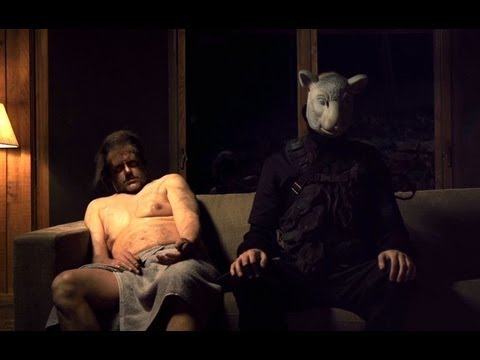
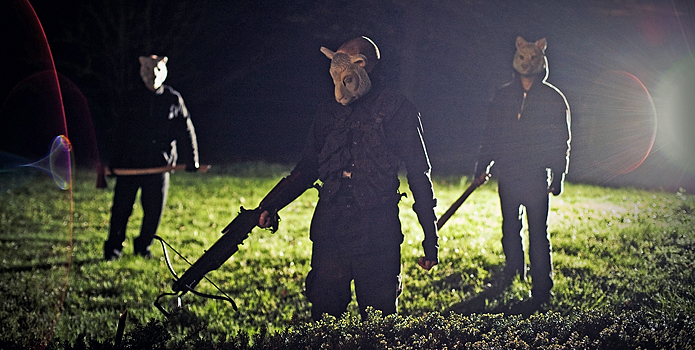
The next twenty minutes of the film play out much like a standard home invasion thriller, with the family hysterical and running around in circles, making the worst possible decisions about their own survival. After a couple more deaths, we meet the Davisons' anonymous assailants - the men in animal masks so prominent in the film's marketing campaign. The violence escalates gradually, as the Animals come after them with crossbows, machetes, razor wire, and more. But what The Animals didn't bargain for is Aussie hottie Erin (Sharni Vinson), girlfriend of brother Crispian Davison, whose survivalist upbringing make her the perfect final girl for this unconventional slasher tale. Erin is the voice of reason, keeping the family members away from windows, contacting the police right away, and setting gruesome traps for the Animals. The second half of the film consists largely of Erin kicking ass and owning the Animals in a hilarious gorefest. That, and, of course, the answer to the film's big question: who are the Animals, and why are they doing this to the seemingly innocent Davisons? You'll have to buy a ticket and go check out the film for that one.


This is a film with a huge amount of atmosphere, having been shot entirely on the premises of one large, remote old house. From the Davisons' perspective, we see out the house's many windows into the dark of night in a heavily wooded area, where anything could easily hide. Every so often, the camera changes hands, and we see into the house as the Animals, tracking the Davisons from room to room as they move in the lighted windows. The film makes great use of some slasher film tropes and traditional jump scares, because as much as the avid horror fan may seem them coming, it just wouldn't be as fun without the face under the bed, or hiding behind that open door.


I found one scene in particular to be especially gorgeous and well-executed. Erin, hiding in the basement and unsure of who might be left alive upstairs, springs a trap for one of the animals who has pursued her downstairs. She sets up a camera to illuminate her assailant, shocking him into blindness as he crosses the room. The camera flash repeats at intervals, breaking the darkness into quick shots of light. Not only was it a clever device for our crafty heroine to utilize, but the visual effect was unique and stunning.


The entire cast gives great performances as a family with a lot of skeletons in their closet. There is a genuine quality to the familial interactions - the competitive siblings, doting parents, and nervous significant others come across perfectly. Joe Swanberg shines as the most irritating and condescending of the brothers, and he is gifted with some of the film's most hilarious lines of dialogue. A.J. Bowen, on the other hand, gives an endearing performance as the academic black sheep of the family, whose professional failures are irresistible to his brothers and father. Barbara Crampton plays the drug-addled and somewhat tragic matriarch in a very classic style.


You're Next really does have something for every horror fan. Lovers of everything from The Purge back to John Carpenter's Halloween will find something to enjoy, as will fans of the Evil Dead films and Robert Rodriguez's Planet Terror. Without revealing too much and spoiling the juicy twists and turns of a really solid film, I absolutely urge you to check this out when it opens Friday. Support horror releases from major studios like Lionsgate, and we'll continue to see quality work like this make it to the big screen.

On a side note, the final installment of Edgar Wright's Blood and Ice Cream trilogy, The World's End, also opens this weekend. Check out my review here.

Friday, August 9, 2013

The Purge: What Would YOU Do?

Earlier this summer, Blumhouse Productions (Paranormal Activity, Sinister) released James DeMonaco's second major directorial effort, dystopian horror thriller The Purge. The film performed well at the box office, but received mixed reviews from critics, with Entertainment Weekly saying that it 'clearly has a lot on its mind, but it never really manages to express it.' However, a lot of the questions The Purge asked its audience to ponder were never really intended to be answered by the film's resolution. The Purge simply chronicles one family's horrific night as the government sanctioned Purge makes its way into their home, and forces audiences to ask themselves: What would YOU do if there were absolutely no consequences?


 The Purge is set in the not-too-distant future, when American's 'New Founding Fathers' have instituted an annual 12-hour 'Purge' in which all crime is legal and Americans can exercise their aggressions. The film focuses on a wealthy suburban family, the Sandins, who have made their fortune selling security systems to other wealthy suburbanites since the Purge was conceived. Every year, at 7:00 p.m., the Sandins lock down their home for 12 hours along with many other families who do not wish to participate in the violence, but support the event nonetheless. But this year takes a turn for the dangerous when their young son, Charlie, hears cries for help in the street, and opens the doors of their house to a homeless African-American man pursued by sinister gang of masked marauders. The family faces a difficult decision: uphold the right of every American to Purge and surrender the homeless man, or protect him and risk their own lives?


The film plays out like a good old-fashioned home invasion thriller, with a very normal family that audiences grow to like over the 85-minute run time. Charlie is the most compelling, a technological wiz-kid who has built a remote-controlled spy camera to give him eyes around the large house. It is also Charlie whose dialogue prods at the film's larger themes, like when he asks his father why the homeless man deserves to live any less than they do. And another interesting side plot revolves around teenaged daughter Zoey, whose romance with an older boy seems lighthearted until boyfriend Henry uses the Purge as an excuse to go after her disapproving father. Ethan Hawke delivers an earnest if rather bland performance as the patriarch of the Sandin family, and his staunch support of the Purge results in an interesting conflict with his otherwise kind nature. But it is mother Mary Sandin, played by Lena Headey of Game of Thrones fame, who ultimately holds the family together and stands up in support of nonviolence (though not before committing a grisly act with a letter opener).


The mask is a time-honored horror device, and The Purge makes excellent use of some very creepy grinning ones. Other than their so-called 'Polite Leader' (Rhys Wakefield), the murderous gang threatening the Sandins do not remove their masks as they commit brutal, terrible acts against their captives and gleefully destroy their home. This lends a surreal effect to the climactic scenes of the film, and underscores the notion that these violent young people represent every young American who has ever felt a surge of aggression and had a dark fantasy about letting it out. Because ultimately, The Purge is a film that seeks to set you, the viewer, in a stranger's shoes, and leave you wondering if you would do the things that they do, if there were truly no consequences. If you would stand up, like the Sandins, to defend not only your family, but also an innocent stranger. Or if you would seize the opportunity to harm others with impunity, out of unchecked aggression, envy, or just pure hatred.


The film also touches on some themes relating to racism and classism that strike a chord in today's economic climate. Early in the film, a voice over on a television news broadcast describes how The Purge came about as a way for Americans to purge their aggression, but is in fact regarded by many as purging society of its weaker members, those who are unable to defend themselves, or can't afford a safe place to wait out the 12-hour event. The masked people continually dehumanize the homeless man by referring to his as 'The Swine' or 'pig,' and espouse the belief that people like him can only be useful by serving the group's need to Purge. We also see in the film's first scenes that the Sandins' neighbors have no love lost for the family, when neighbor Grace Ferrin jokes with Mary that the neighborhood's security systems paid for the Sandins to put an extension on their home. The envy of the neighbors has festered for some time, and rears its head in the film's final scenes.

Whether or not its themes resound with you, The Purge is a fun little thrill ride in the dark, and will certainly make excellent fodder for this year's Blumhouse Halloween Attraction, The Purge: Fear the Night. The live, interactive experience, which starts September 27th and runs through Halloween week, will put attendees in the shoes of the New Founding Fathers of the dystopian future depicted in The Purge. Tickets are available now at PurgeLive.com.

The Purge comes to DVD October 8th.


Monday, August 5, 2013

V/H/S/2: Found Footage Never Looked This Good

Back in 1999, Eduardo Sanchez and Daniel Myrick's The Blair Witch Project used a cutting edge online marketing campaign to successfully dupe many viewers into believing they were watching actual footage of three young people's supernatural experience in the Maryland woods. The manner in which the movie was filmed supported this conclusion: shaky handheld camerawork and a documentary-style narrative all contributed to a very real atmospheric horror film that went on to gross almost $250 million. Given that the film was purportedly shot on a budget of about $25,000, The Blair Witch Project popularized a style of filmmaking that although not entirely new (Ruggero Deodato's Cannibal Holocaust pioneered the style almost 20 years earlier), promised to turn record profits for filmmakers and production companies.


Fast-forward to the present day. The found footage style of filmmaking is everywhere now, most common to the horror genre, but directors of science fiction and a couple other genres have also used the style to great effect. Films like the Paranormal Activity franchise, Cloverfield, and Jaume Balaguero and Paco Plaza's REC series have seen enormous popularity, high critical acclaim, and have performed remarkably well at the box office. But with the popularity of found footage has come a fervent backlash amongst many genre fans who don't find the style effective, are put off by the often shaky and intentionally amateurish filming style, or have begun to feel the concept is overdone. Personally, I've sat dozens of friends down to watch The Blair Witch Project, turned the lights off for atmosphere, and insisted on absolute silence to try and make them see what I find so deeply unsettling about the film. Over time, I've come to accept that found footage just isn't for everybody. Some people don't have the patience for the slow burn. They like their horrror overtly terrifying, fast-paced, and splattered with gore. For those people, Bloody Disgusting and The Collective have teamed up to bring to the screen eleven of the best short horror films showcasing the found footage style, in anthology films V/H/S and V/H/S/2.

V/H/S/2 hit VOD June 6th of this year, saw a limited theatrical release on the U.S. last month, and is set for release on Blu Ray, DVD, and of course VHS September 24th. Though this second installment features a new group of directors, I found a lot of similarities between the stories in both, and a great continuity between both films' narrative frameworks.


Similar to the first film, V/H/S/2 begins with a pair of private investigators who are searching for a missing student, and stumble across a collection of VHS tapes that chronicle many different horrific occurrences. First comes Adam Wingard's contribution, Phase I Clinical Trials, starring the director himself as a rather unremarkable Los Angeles man who lost an eye in a bad car accident. Lucky for him, a local doctor has set him up with a false eye that will communicate visual stimuli not just to his own brain, but to a video feed that scientists may watch to get a sense of the implant's functioning. But when the patient gets home from the doctor's office, he starts to notice strange things almost immediately. The artificial eye has endowed him with a second sight he doesn't want, and it soon becomes clear that he is not alone in his own house. What I found most effective about this short was the use of distorted artifacts on the screen which appeared whenever an entity was present in the patient's line of sight. I was reminded of Glenn McQuaid's segment for the first V/H/S film, Tuesday the 17th, in which a murderous figure in the woods is continuously obscured on screen by video tracking errors.


Next comes Eduardo Sanchez and Gregg Hale's A Ride In The Park. I found this segment to be the most light-hearted and funny out of the entire film, featuring three bicyclists in a state park who are attacked by zombies and join the mob to march on a child's birthday party nearby. Shot from the head-mounted camera of one of the zombified bikers, viewers are treated to the first-person perspective of a zombie lurching through the woods, devouring intestines, and getting bashed in the skull by frightened victims. It's obvious that the team had a lot of fun filming this one, and a comedic undertone runs throughout as, for instance, our zombie hero attempts to eat a victim's wallet, then tosses it aside with a 'blech' of disgust.


The fourth segment, Gareth Huw Evans and Timo Tjahjanto's Safe Haven, was in my opinion the strongest of the entire film, and possibly the best out of both V/H/S anthologies. A documentary film crew is invited to film inside the compound of an Indonesian cult in which the leader, known as 'Father,' cleanses the impurities of his flock through sinister and questionably legal treatment of young girls. But the darkness in Father's compound runs even deeper than the film crew imagines, and soon the three young men and one woman are trapped in a ritual nightmare there's no escaping. The short is brutally violent, depicting the Jonestown-esque mass-suicide of the cult, as well as some really horrific supernatural happenings that I would hate to spoil for anybody. The acting is superb, especially on the part of Epy Kusnandar as the magnetic and ultimately psychotic Father. And viewers get a few glimpses of some really fun creature design toward the end of the segment that would not be out of place on a Black Sabbath album cover.


The conclusive segment of V/H/S/2 come courtesy of Jason Eisenberg, the man behind 2011 exploitation comedy Hobo With A Shotgun. Titled Slumber Party Alien Abduction, viewers know exactly what they're getting into, and Eisener delivers. The short begins as the raucous account of a teenage boy and girl whose friends come over for a party whilst the parents are out of town. But the sexscapades and back-and-forth pranking turn dark when the arrival of terrifying creatures from the sky interrupts their shenanigans. Filmed from the perspective of the family dog, who has a camera strapped to his back, the story dissolves into chaos as one by one the teenagers are taken up by the thin, grey men. Creature design is excellent, showing us just enough glimpses of the creatures to create terror, and sympathy for the naive and innocent kids strikes an emotional chord throughout.

Even if you think found footage isn't for you, the producers of the V/H/S films have done a spectacular job gathering some of the greatest minds of independent horror today, and these anthologies have something for everyone. Look for the DVD-Blu Ray-VHS three-pack this September.

Friday, August 2, 2013

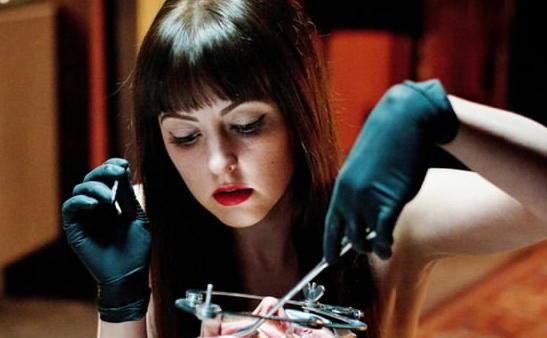
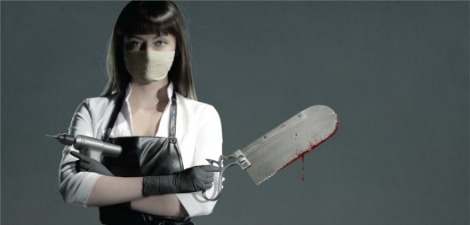
American Mary: Sexy, Insane, Surreal, Feminist Body Horror

Canada's Soska Sisters, Jen and Sylvia (also known as the Twisted Twins), burst onto the film scene in 2009 with their sardonic exploitation debut Dead Hooker In A Trunk. The writer-director duo have since continued to splatter the festivals red with a series of well-received shorts, and last year's feature-length American Mary, starring Ginger Snaps' Katharine Isabelle as the titular heroine. In a genre dominated by male screenwriters and directors, the Soska Sisters are blazing a trail for a new brand of scream queen, and doing it in stilettos, no less.


Mary Mason is an extremely bright but timid surgical student, finishing up her coursework and soon to go into her residency and begin a promising career in medicine. Financial desperation leads her to peruse the same online ads many young women are drawn in by, offering plenty of cash for the small price of one's self-respect and modesty. But Mary's 'interview' to become a dancer at the Bourbon A Go Go takes an entirely unexpected turn when the club's bouncer brings in a bleeding man who will die without immediate medical attention. Unwilling to take the man to a hospital, club owner Billy offers Mary five-thousand dollars to stitch the man up in the basement, and Mary hardly hesitates before agreeing.


Recovering from the previous night's harrowing experience in her apartment, Mary is then visited by another of the Bourbon's employees, the otherworldly Beatress, who has paid thousands of dollars to discrete surgeons to be made in to a living Betty Boop. Beatress entices Mary to a veterinary clinic after hours with the promise of a couple grand easy money, where she reveals her mission to help a friend, Ruby Realgirl, become as anatomically incorrect as a doll. Mary complies, earning a tidy ten-thousand, and returns to her residency shaken but more determined than ever to begin a successful surgical career. But all that is derailed when her mentor, Dr. Walsh, invites her to a surgeons' party that is not what it seems. Mary is brutally sexually assaulted by her own professor, a Dr. Grant, and returns to the Bourbon A Go Go disillusioned with the medical world, and plotting a grisly revenge.
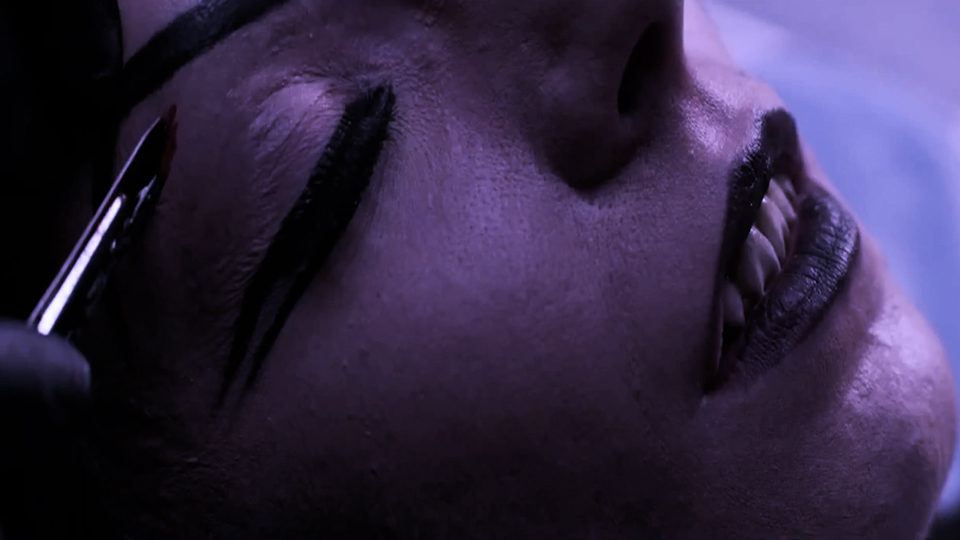

There's no doubt that American Mary is not for those with weak stomachs. This is skin-crawling body horror at its finest, but with strong themes of female power and sexuality that make it unlike anything David Cronenberg could come up with. Is Mary Mason the first 'strong female character' in the horror genre? Of course not! Despite being mostly a boys' club, the horror genre has produced plenty of female heroes, final girls, and villains over the years worth writing about. What sets American Mary apart is the fact that we see a strong woman whose fate has been written by women, and is as flawed and complex as a real woman would be. Is Mary an intensely ravishing sex symbol? Absolutely. But not in the sense that female sex symbols are typically cast by male directors. Mary's character is strongly sexualized throughout the film, but not because she is objectified by the men of the story. Mary stands in a position of strength and power above the men in the film, from those who she punishes for doing her wrong, to club owner Billy who holds her in his mind as a paragon of untouchable femininity.


The film also plays in a more surreal realm than most mainstream horror, injecting elements of the bizarre one by one into Mary's world until the whole thing has unraveled. We get a strong sense early on that something is not right with the professors and doctors at Mary's school, such as an early scene in which Dr. Walsh describes to Mary 'the adrenaline rush you get when you slice into a human being...' The sinister undertones of these respected surgeons reach a zenith when Mary arrives to the strange party and meets a Dr. Black, who will reveal nothing about himself. She is then taken aside by Dr. Grant, who tells Mary some of Dr. Walsh's more disturbing proclivities. By then, the drug in Mary's drink has taken its effect, and it is too late to change her own fate. As the film goes on, more and more of Mary's former life erodes, and is replaced by the strange characters of the body modification world, from living dolls to the Twins (played by the directors themselves) who wish to exchange arms surgically.


Yes, American Mary is a touch gory. But with the film's surgical subject matter, one can't say that the Soska Sisters go over the top. Key scenes have all the building tension of films denounced as 'torture porn,' but without the grisly and overblown effects of unnecessary violence. Many of the most gruesome parts happen off-screen, and are aided by beautifully subtle sound design. The slicing and tearing off flesh off-camera has a much stronger psychological effect than buckets of Karo syrup on-screen would.

The Twisted Twins have a lot to offer the ever-changing horror genre. Fascinating, three-dimensional characters inhabiting bizarre fantasy worlds make for a much better film all-around than a slasher chasing victims around for ninety minutes, or extended scenes of torture meant to make you shut your eyes. That's not to say this one doesn't offer plenty of well-appointed gore - I tried eating lunch while watching this one and instantly regretted it.

As of January, American Mary is in wide release on DVD and Blu-Ray.

Tuesday, July 30, 2013

The Child's Play Saga: What Can We Expect from Curse of Chucky?

By now, we've all seen the trailer for Don Mancini's upcoming sixth installment of the Child's Play franchise, Curse of Chucky. Out October 23rd on DVD and VOD, Curse of Chucky is being promoted as a return to the straight-up horror style of Child's Play 1-3, and a departure from the satirical, meta-horror approach taken by Bride of Chucky and Seed of Chucky. To stave off my own impatience for the new film's release, I decided to sit down and re-watch all five existing films in succession, and share some of my thoughts about the progression the franchise has taken thus far, and where it sounds like it's going.


Mancini has said that his initial idea for Child's Play was to comment on the influence that advertising has on children. In the first film, our young hero Andy begs and begs his hard-working single mother to get him a Good Guy doll just like the ones on TV, but the two get more than they bargained for when Andy's mother brings home the very doll that plays host to the soul of serial killer Charles Lee Ray, voiced by Brad Dourif. Despite a somewhat silly premise (Ray uses a voodoo incantation to move his soul into the doll when he is mortally wounded in a police firefight), this first film spawned a genuinely frightening and enduring villain, and what was originally intended as a stand-alone film grew into a blockbuster franchise. What makes Chucky the killer Good Guy doll such a spectacular horror antagonist? The first film achieves great effect by placing an innocent child in harm's way, a device used so well in classics like The Exorcist and The Shining. The viewer's care for the welfare of the character in danger leads to a deep emotional connection for viewers. The adults in the child's life write off the horrors he is experiencing as products of an active imagination, which is frustrating and upsetting to watch as the film goes on. This level of attachment to the character of Andy continues as the doll follows him to a foster home in Child's Play 2, and to military school in Child's Play 3. 


In bringing the character of Chucky to life, Mancini also had great success playing on the fan following of A Nightmare on Elm Street villain Freddy Krueger. Krueger's smart-assed one-liners and snide attitude toward his victims made him completely unique to the slasher genre, and coming just a few years on the heels of Elm Street's inception, Child's Play created a similar comedic killer. Brad Dourif delivers Chucky's lines with a trademark gravelly tenor, and his characteristic laughter as he commits horrific murders brings glee to his legions of morbid fans. Effects designers did a brilliant job of underscoring the change that Chucky undergoes when he switches from his Good Guy doll appearance into full Charles Lee Ray. His smiling doll features twist into a grotesque grin, and his voice drops from a sweet, high-pitched boy's to a deeper and much more sinister man's. The juxtaposition of a lovable child's toy with the personality of a ruthless serial killer converges into one of horror's most iconic slashers.


With 1998's Bride of Chucky, the franchise took a turn toward the ironic meta-horror style popularized by the Scream films, and followed up on its success with the 2004 Seed of Chucky. Both films gained another great comedic role with the addition of Jennifer Tilly as Chucky's bride, Tiffany, and then as herself, playing the role of Tiffany in a film-within-the-film. The classic slasher film elements of the first three films gave way to slapstick comedy, plenty of adult humor surrounding Tiffany and Chucky's relationship, and a self-referential tone designed to appeal specifically to die-hard horror fans who had already seen it all.


Watching the five Child's Play films again, I was struck by the consistency of the character of Chucky, and I think that Brad Dourif's continued involvement in the franchise is the glue holding it together. Despite changing directors for each successive film, the most memorable character has remained just as well-written and portrayed, and that makes for an enduring franchise. So what does Mancini have in store for Curse of Chucky? We can certainly expect darker plot elements, as the official synopsis includes the detail that the protagonist will be dealing with the recent suicide of her mother. While the link between the first Child's Play film and this one remains ambiguous, we've been told that Chucky intends to settle a score from more than 20 years ago, which suggests a full-circle reckoning to the original backstory of Charles Lee Ray. And as far as character design goes, the Chucky depicted in the official trailer has been returned to his original, brand-new Good Guy look, the stitches and scars of the last two films having been removed.

Don't let the straight-to-DVD release of this film turn you off from giving it a watch. For fans of the original Child's Play film, Curse of Chucky should prove to be a well-executed return to form, and bring Chucky back to life in a more terrifying form than ever before.

Monday, July 29, 2013

BANNED in New Zealand: What Makes Franck Khalfoun's Maniac So Twisted?

While I may be a little late to the party on this one, I finally got around to watching Franck Khalfoun and Alexandre Aja's remake of the 1980 slasher film Maniac, starring Elijah Wood, which made the festival circuit last year and saw a limited theatrical release earlier this month. I was finally spurred to check this one of the long, long list of films I've been meaning to see by the news circulating this week that New Zealand's Office of Film and Literature Classification had banned the film from being screened outside of film festivals or academic study. And while I do not in any way whatsoever condone the banning of films or other artistic materials, I wanted to take a minute to examine some of the things that set Maniac apart from other violent and disturbing horror films, and look for some insight into why the OFLC chose to keep this film from the eyes of New Zealand's viewing public.


The shooting style of this film makes it unlike any other in that nearly the entire film is shot in first-person perspective through serial killer Frank Zito's eyes. This is of course a very literal interpretation of an effect that many directors try to achieve through storytelling, and it takes some getting used to in the beginning of the film. However, the murders and violent mutilations that Frank performs on his victims become that much more disturbing up close from his perspective, and the effect achieved as the women look into the camera with pleading eyes, attempting to fend off attacks coming from the viewer's perspective, is genuinely disturbing. Being quite literally inside of the killer's head also helps lend a sympathetic bent to his character, as we see through his own eyes flashbacks to his childhood, and watch his mother bring strange men into their home and her bed.


And the particulars of the violent murders depicted in Maniac are definitely outside the parameters of what the modern horror fan has seen a hundred times. As in William Lustig's original, Frank's signature when killing is to remove the women's scalps, which he then affixes to his collection of mannequins to create lifelike companions. Outside of the 1980 Maniac, the only other film with a scalping scene that immediately comes to mind for me is Rob Zombie's House of 1000 Corpses. The idea is certainly not done-to-death, but what really made these scenes difficult for me to watch was the speed at which the act was shown. Modern horror leans a lot on quick slicings and dicings with giant arcs of blood spraying all over. However, Frank performs his scalpings slowly and with great care, in order to keep his trophies intact. Thick, dark blood pools slowly around the skull as he delicately peels the scalp away, and the viewer is forced to watch the surgery right up close until he is squirming in his seat or averts his eyes.


There is absolutely no Hollywood style or flash to this film, other than perhaps the beautiful minimalist soundtrack. There is a poignant sadness to Frank Zito's insanity and the manner in which he kills that feels so much more real than the gleeful axe-wielding psychopaths we horror fans are accustomed to seeing, and it stayed with me much longer than usual. Watching this film made me feel intensely connected to its main character, and really left me feeling unclean afterward. Bearing that in mind, the New Zealand OFLC's ban comes as no surprise from a country known for censoring both games and films, the most recent of which being the 2006 documentary The Bridge, which dealt with suicides at the Golden Gate Bridge.

All that being said, I would encourage readers from countries in which the film remains widely available to give this one a watch. Khalfoun has achieved a level of emotional depth seldom found in a slasher film, and Elijah Wood gives a deeply troubling performance in a role that is sure to land him plenty of future roles in genre films.

Saturday, July 27, 2013

We're Not Using the Zed Word: Edgar Wright's Blood & Ice Cream Trilogy Comes to an End

Monday evening saw the Bay Area premiere of The World's End, the final installment of what has been dubbed the Blood & Ice Cream (or Cornetto) Trilogy, by British director Edgar Wright and starring Simon Pegg and Nick Frost. Beginning with the cult favorite zombie comedy (zom-com?) Shaun of the Dead in 2004, the team grew a strong following in the U.S. despite low theatrical earnings, and followed up with the equally under-appreciated spoof action film Hot Fuzz in 2007. The trilogy will come to a close when The World's End hits U.S. theatres August 23rd.

Tracie Chang's glorious poster designed just for Monday's event

Thanks to San Francicso institution MiDNiTES FOR MANiACS, now in its twelfth year, I was fortunate enough to attend a triple-feature screening of the trilogy in its entirety Monday, at the AMC Metreon. Watching the three films one after the other not only gave us lucky 200 audience members a chance to revisit everything we found brilliant about Shaun of the Dead and Hot Fuzz the first (and second, and third) time around, but it also underscored some of the thematic elements holding the trilogy together, and what I have come to see as Wright's overarching 'message.' Read on for my own attempt at a scholarly examination of the films, and a mini-review in which I will attempt to amp you up for the release of The World's End without spoiling the big, secret twist! Here goes nothing...

A romantic comedy. With zombies.
Every time I sit down to yet another viewing of Shaun of the Dead, I fall in love all over again in the first five minutes of the film. First, you're treated to a deliciously clever opening credit sequence, in which the masses of people on the streets of London go about their morning routines, effectively zombified by boredom and banality. Shortly thereafter comes a beautiful long shot that follows our hero all the way from his front door, down the block, to the corner market in one extended pan. The quick, frenetic camerawork throughout the film keeps you on your toes as things go from mundane to insane, and Shaun and his friends go head (or, rather, cricket bat) to head with the walking dead. 

"I've got things I wanna do with my life!"

Shaun of the Dead was conceived, filmed, and released when Wright, Pegg, and Frost were all in their late twenties to early thirties. Not only is it remarkable that a team of such relatively young filmmakers were able to create something so original with such lasting appeal, but the themes of the script really represent their particular stage of life at the time. Shaun, stuck in a thankless sales job amongst gum-smacking teenagers, is at a crossroads where he must decide who he wants to be, in a larger sense, and his girlfriend Liz is there gently, then not-so-gently, urging him on. Only when the undead threaten the lives of his loved ones does Shaun find that the ability to step up and become a hero was always within him, and not only saves but also wins back the girl of his dreams.

When the heat is on, you gotta call the fuzz.

Hot Fuzz brings Pegg and Frost back together on screen in yet another vignette of the life cycle of the average man. In this second installment, Pegg plays star police officer Nicholas Angel, who has a stellar arrest record, commendations coming out of his ears, and is set up for a nice promotion. He has put years of tireless effort into establishing himself in a career, and when he is transferred to a small, sleepy village in the countryside, he begins to see that he is missing the other aspects of a full and happy life. With the help of his bumbling partner, played by Frost, he works to uncover the truth behind a series of murders disguised as accidents, and in uncovering a vast Neighborhood Watch conspiracy, he finds it in himself to let go a little and toss the hard-and-fast rule of law aside in the name of what is right.

"My discounts are... criminal."
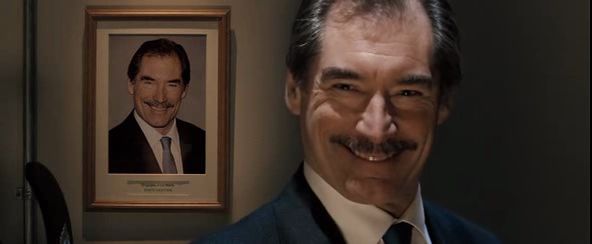
It wouldn't be right to discuss Hot Fuzz without a nod to some of the spectacular supporting performances by some really big British names. Jim Broadbent gets plenty of screen time as the benevolent but ultimately twisted Chief Inspector of the Sandford police, and as he loses his grip on sanity in the film's final scenes, he really steals the show. Timothy Dalton menaces from his first scenes as the sinister owner of the local supermarché. And early in the film, Bill Nighy, Martin Freeman, and Steve Coogan all flit across the screen in a brief comedic turn as Angel's superiors.

Good food. Fine ales. Total annihilation. 
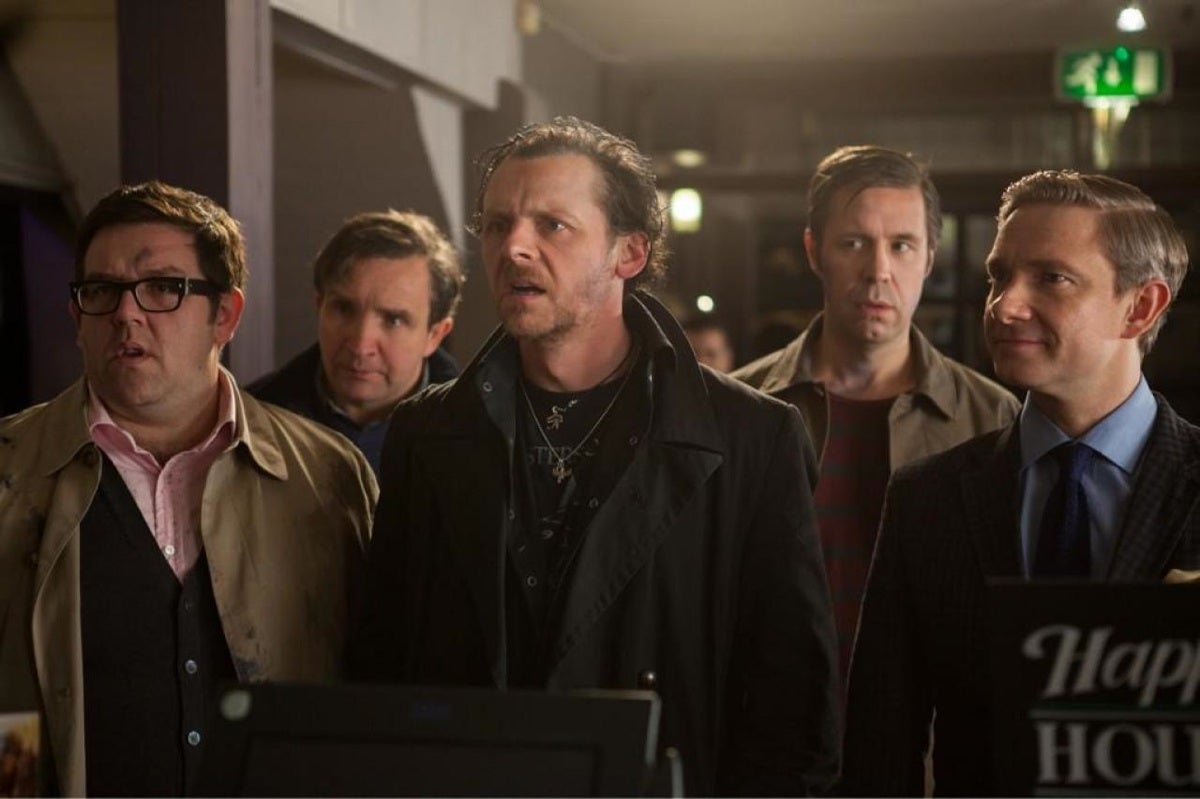
So having paid brilliantly clever homage to the horror genre, and then to the action-cop films of the eighties and nineties, what ground is left to be covered? Some readers will be thrilled to learn that Wright's latest, and the conclusion of the trilogy, runs in the vein of science fiction, playing on the clichés and tenets of alien classics like Invasion of the Body Snatchers. But The World's End is more than that - it's a film from the perspective of a writing team entering middle age, and beginning to look back on the accomplishments, mistakes, and missed opportunities of youth. Pegg's character, the antihero of our story, is the Gary King, once the ringleader and Casanova of his pack of school chums. In the present day, he is a train wreck - he is unmarried, childless, by all evidence jobless, and struggling with substance abuse. In an attempt to reclaim the glory of the day he graduated from school, Gary reunites his four old friends (played by Nick Frost, Martin Freeman, Eddie Marsan, and Paddy Considine) and convinces them to grudgingly join him in completing a twelve-pub crawl through their hometown. But things aren't as they used to be in the town of Newton Haven, and the five soon find themselves not just fighting to reclaim their youth, but fighting for the future of the entire human race.


In the last film of this epic trilogy, Pegg and Frost both give truly spectacular performances, both in and outside of their respective comedic wheelhouses. There is a poignant sadness to Pegg's portrayal of the wayward Gary King as he puts on a brave front for his old friends, that reminded me strikingly of Richard E. Grant's performance in Bruce Robinson's 1987 cult classic Withnail & I. (Of course, it could just be both characters' trademark trench coats.) And Frost is deadly serious as Gary's former best friend Andy, a complex relationship that is illuminated as the film moves forward. In the post-screening audience Q+A, Pegg described himself as a teen:

"I was a goth, I watched a lot of Sisters of Mercy videos. That was my thing when I was sixteen to eighteen. I wanted Gary to be like I was when I was sixteen, only trapped in amber."

When asked about some of the more trivial connections between the three films, Wright shed some light on his inspiration for The World's End, as well as the overall them of the Cornetto Trilogy.

"Growing up in a small town, you start to imagine what's going on between closed doors. I think it made me more of a daydreamer. I can remember saying to my friends, 'every time I come back it feels like Bodysnatchers,' and there's a film in that!"


In my own view, which you may of course take with the proverbial grain of salt, all three films touch on some sort of "zombie" collectivism. In Shaun of the Dead, the outbreak is literal, and our heroes struggle to retain their individuality rather than succumb to the zombie virus. In Hot Fuzz, the danger is in a collective pursuing an ideology that has been twisted, perhaps a small-scale allegory for some of the political strife of the last several centuries. Sgt. Nicholas Angel must stand up for goodness when the easier choice might be to do nothing and let evil rule. And in The World's End, fucked up Gary King makes one last stand for the uniqueness of every human that makes our race beautiful, and resists joining the collective Network of dull perfection.

Wright elaborated on this homogenizing of human life:

"When we made Hot Fuzz, which was shot in my hometown, when Nicholas Angel is riding down the high street on a horse, I had to digitally erase a Starbucks. It's like the high street virus has spread everywhere, and everything's the same."

The World's End will make you laugh, cheer, and maybe even cry, and if you're anything like me, some of the themes will resonate with you long after you've left the theatre. Again, the film hits U.S. theatres August 23rd, and it's going to be a hell of a lot more bang for your buck than a certain Seth Rogen film of a similar title... Trust me.