Showing posts with label thriller. Show all posts

Tuesday, March 4, 2014

Grand Piano Delivers Symphonic Thrills

Fresh off his win of Fright Meter's Best Actor award for his role in Franck Khalfoun's Maniac remake [read my review here], Elijah Wood stars in Grand Piano, an unconventional thriller from Spanish director Eugenio Mira which opens in a limited US release this Friday. Wood gets to be the good guy this time, portraying a brilliantly talented but nervous and cynical piano prodigy, Tom Selznick. We meet Selznick and his A-list actress wife Emma on the eve of his first concert in five years, following a very public failure that nobody will let him forget. But Selznick soon learns that a little stage fright is the least of his concerns, when he settles onto the piano bench only to find a series of threatening annotations scrawled across his score. "Play one wrong note and you die," reads the first. "Do you think I'm kidding? Look to your right."


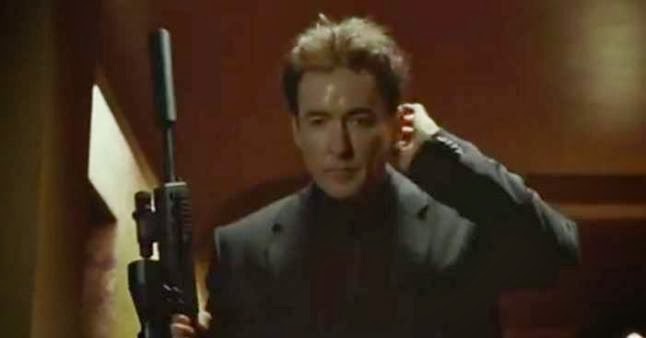
As he does so, the scope of a sniper rifle finds him, and directs him offstage where he finds an earpiece has been left for him. Donning the earpiece, Tom enters into a frenzied game of cat-and-mouse that lasts the rest of the performance, in which he must continue to play flawlessly or risk the life of his beautiful wife, who watches unknowing from a box seat. The voice on the other end of the earpiece belongs to John Cusack's character, whose motives are unclear, but seem to have something to do with the missing fortune of Selznick's late mentor, an eccentric and brilliant composer.

For an avid fan of the horror genre (he recently founded The Woodshed Horror Company, which has three films in the works), Wood has been cast in surprisingly few roles on the darker side of cinema. Fans were suitably impressed with his portrayal of silent, cannibalistic serial killer Kevin in Frank Miller's Sin City, and glad to see him land a starring role as the psychopathic Frank in Maniac. The role of Tom Selznick, however, bears a lot more similarity to one of his earliest roles, the skittish high school newspaper photographer in the 1998 sci-fi send-up The Faculty. Selznick has a fear of flying, is a chronic nail-biter, and, as multiple characters remind him within the first act of the film, has a history of being frozen by stage fright in tense situations. In the end, however, he must find a way to turn his frantic nerves from a crutch into a weapon, and play the piano like his life quite literally depends on it.


The electric energy that drives Grand Piano forward can be attributed in large part to its sweeping original score, penned by Mira himself, who is a composer first and foremost. The constant crescendos and brash, discordant notes begin during the credits, setting the soundtrack to a series of close-up shots of piano parts that are made to almost resemble some strange weaponry. The intensity of the score rarely lets up through the film's 90-minute runtime. The music is almost a character in and of itself, with Selznick's late mentor's 'La Cinquette,' believed to be unplayable, starring in the final, fevered sequence of the film.


What is perhaps most notable about Grand Piano is the way the camera seems to follow along with the score, as if the same conductor is leading both. As the tempo of the film builds, so too does the speed of the camera movements, along with the intensity of the colors and drama of camera angles. The film instills a palpable sense of dread from the first scenes, in which slow-panning, voyeuristic shots show Selznick from a distance. We move closer to our hero as his heart rate speeds up and a sweat breaks out on his brow, the intimacy of the camera seeming to echo his paranoia perfectly. As Selznick and the orchestra play, the camera lilts along, following each crescendo, highlighting a section at a time, and traveling in a constant musical arc around Selznick himself. As the action becomes more tense, the camera becomes more frantic, showing Selznick tilted at 90-degree angles, then spinning quickly in a circle as the lighting fades to blood-red.

You'd be hard-pressed to categorize Grand Piano as a horror film, but it just might be the most artistic entry into the thriller sub-genre in many years. Riding along on the waves of Mira's phenomenal score, the film's brief 90 minutes feel like 20, and you the viewer are thrown right into the middle of the most unusual mystery you'll see this year. Grand Piano opens in limited release this Friday.

Friday, August 9, 2013

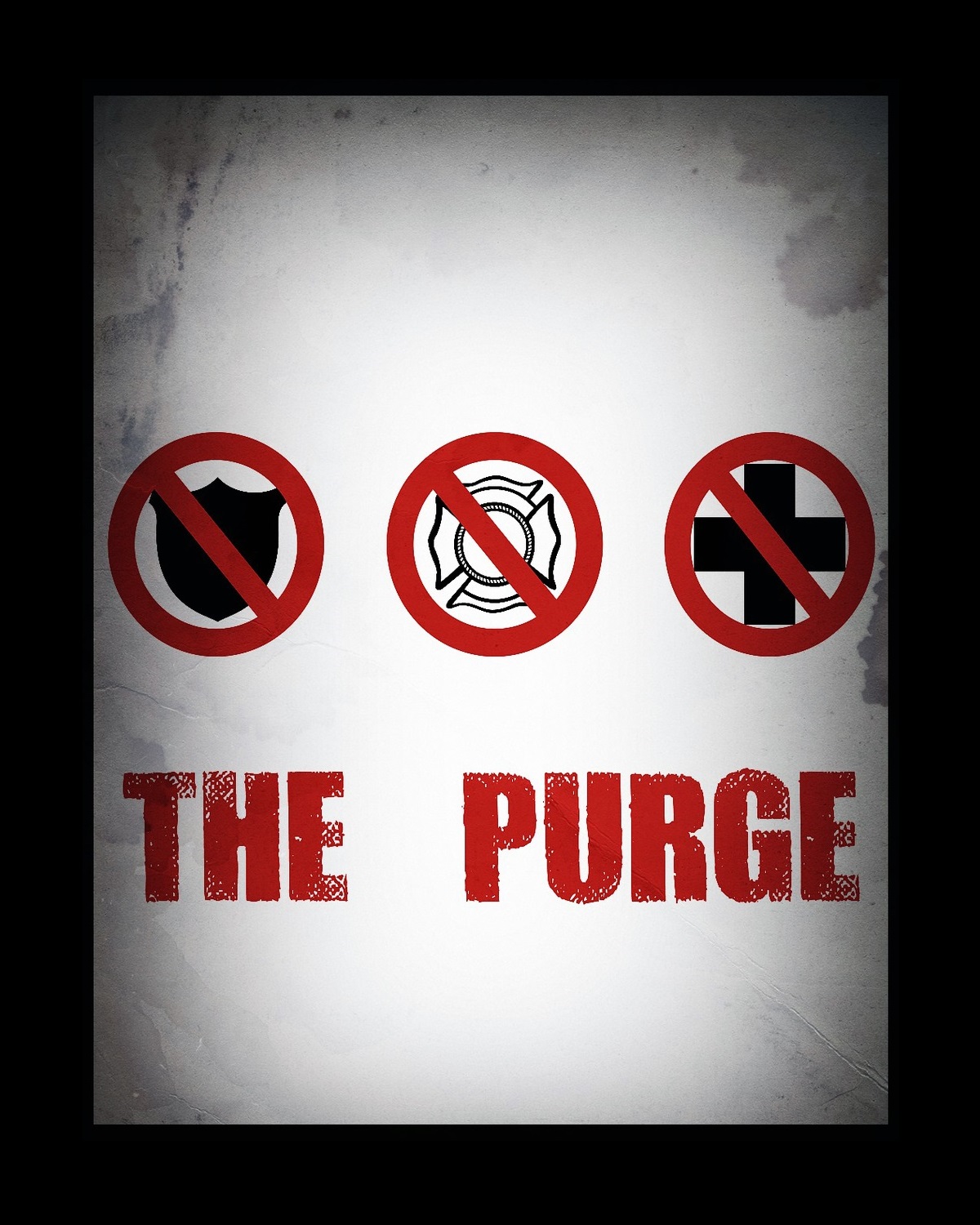
The Purge: What Would YOU Do?

Earlier this summer, Blumhouse Productions (Paranormal Activity, Sinister) released James DeMonaco's second major directorial effort, dystopian horror thriller The Purge. The film performed well at the box office, but received mixed reviews from critics, with Entertainment Weekly saying that it 'clearly has a lot on its mind, but it never really manages to express it.' However, a lot of the questions The Purge asked its audience to ponder were never really intended to be answered by the film's resolution. The Purge simply chronicles one family's horrific night as the government sanctioned Purge makes its way into their home, and forces audiences to ask themselves: What would YOU do if there were absolutely no consequences?


 The Purge is set in the not-too-distant future, when American's 'New Founding Fathers' have instituted an annual 12-hour 'Purge' in which all crime is legal and Americans can exercise their aggressions. The film focuses on a wealthy suburban family, the Sandins, who have made their fortune selling security systems to other wealthy suburbanites since the Purge was conceived. Every year, at 7:00 p.m., the Sandins lock down their home for 12 hours along with many other families who do not wish to participate in the violence, but support the event nonetheless. But this year takes a turn for the dangerous when their young son, Charlie, hears cries for help in the street, and opens the doors of their house to a homeless African-American man pursued by sinister gang of masked marauders. The family faces a difficult decision: uphold the right of every American to Purge and surrender the homeless man, or protect him and risk their own lives?


The film plays out like a good old-fashioned home invasion thriller, with a very normal family that audiences grow to like over the 85-minute run time. Charlie is the most compelling, a technological wiz-kid who has built a remote-controlled spy camera to give him eyes around the large house. It is also Charlie whose dialogue prods at the film's larger themes, like when he asks his father why the homeless man deserves to live any less than they do. And another interesting side plot revolves around teenaged daughter Zoey, whose romance with an older boy seems lighthearted until boyfriend Henry uses the Purge as an excuse to go after her disapproving father. Ethan Hawke delivers an earnest if rather bland performance as the patriarch of the Sandin family, and his staunch support of the Purge results in an interesting conflict with his otherwise kind nature. But it is mother Mary Sandin, played by Lena Headey of Game of Thrones fame, who ultimately holds the family together and stands up in support of nonviolence (though not before committing a grisly act with a letter opener).


The mask is a time-honored horror device, and The Purge makes excellent use of some very creepy grinning ones. Other than their so-called 'Polite Leader' (Rhys Wakefield), the murderous gang threatening the Sandins do not remove their masks as they commit brutal, terrible acts against their captives and gleefully destroy their home. This lends a surreal effect to the climactic scenes of the film, and underscores the notion that these violent young people represent every young American who has ever felt a surge of aggression and had a dark fantasy about letting it out. Because ultimately, The Purge is a film that seeks to set you, the viewer, in a stranger's shoes, and leave you wondering if you would do the things that they do, if there were truly no consequences. If you would stand up, like the Sandins, to defend not only your family, but also an innocent stranger. Or if you would seize the opportunity to harm others with impunity, out of unchecked aggression, envy, or just pure hatred.


The film also touches on some themes relating to racism and classism that strike a chord in today's economic climate. Early in the film, a voice over on a television news broadcast describes how The Purge came about as a way for Americans to purge their aggression, but is in fact regarded by many as purging society of its weaker members, those who are unable to defend themselves, or can't afford a safe place to wait out the 12-hour event. The masked people continually dehumanize the homeless man by referring to his as 'The Swine' or 'pig,' and espouse the belief that people like him can only be useful by serving the group's need to Purge. We also see in the film's first scenes that the Sandins' neighbors have no love lost for the family, when neighbor Grace Ferrin jokes with Mary that the neighborhood's security systems paid for the Sandins to put an extension on their home. The envy of the neighbors has festered for some time, and rears its head in the film's final scenes.

Whether or not its themes resound with you, The Purge is a fun little thrill ride in the dark, and will certainly make excellent fodder for this year's Blumhouse Halloween Attraction, The Purge: Fear the Night. The live, interactive experience, which starts September 27th and runs through Halloween week, will put attendees in the shoes of the New Founding Fathers of the dystopian future depicted in The Purge. Tickets are available now at PurgeLive.com.

The Purge comes to DVD October 8th.